Chinese Herbal Medicine Course
The Herbal Medicine class introduces students in the knowledge of Chinese herbs and trains them to run a practice independently as well as to work safely, competently and effectively.


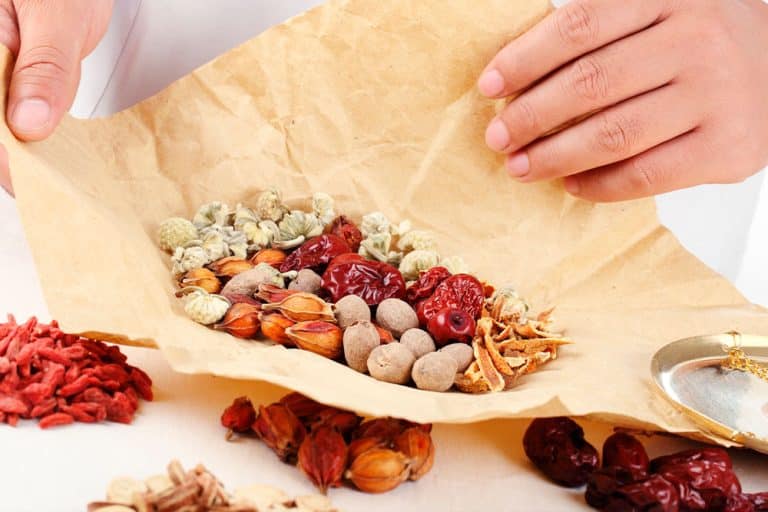
Chinese herbs compliments acupuncture therapy
In China, the study of Herbal Medicine is integrated in TCM education. Acupuncture therapy and Chinese Herbal Medicine when combined, not only complement each other, but also reinforce each other.
During the first year of the Herbal Medicine course, the apprenticeship takes place mainly at the herbal department preparing herbal prescriptions. In the second year it is possible to do your apprenticeship at herbal specialists. Finally students will write a thesis to complete their course.
“After you have graduated, you are ready to independently practice the profession of Chinese herbalist”
Meet your teachers
Below is a brief introduction of our teachers. On the page Teachers and internship supervisors you will find an extensive introduction of all the teaching team .
-

Dan Tan
Dan Tan is a passionate and conscientious academic professional with extensive clinical practice and teaching experience within the Higher Education sector, mainly in the UK and China. Dan taught Chinese Medicine at Middlesex University in the UK for 15 years and at London South Bank University in the UK for over 3 years. Dan is also an Educationalist Member of the British Acupuncture Accreditation Board (BAAB), UK and External Examiner for the University of Westminster, UK. Before moving to the UK, Dan qualified as a TCM Doctor in her native China and worked at the Beijing University of Chinese Medicine (BUCM). She has studied both Acupuncture and Chinese Herbal Medicine and holds qualifications for PhD in TCM Internal Medicine, Master’s degree in Medicine and Bachelor degree in Acupuncture.
-
Cheng Hao Zhou
Cheng was trained at the Shanghai University of Traditional Chinese Medicine, and qualified in 1992 as Doctor of TCM. She worked in the Chinese Health Service for eight years and qualified as “Doctor-in-Charge” in 1998. She joined the NCA team in 2001 and soon acquired a reputation as an excellent practitioner with a sophisticated treatment style. Cheng has worked on various modules of NCA acupuncture and herb programmes, and been an External Examiner for other institutions. She provided an acupuncture service at the James Cook University Hospital Holistic Cancer Care Centre for more than 7 years. She was also an Accreditation Committee member at the BAAB. Cheng’s academic interest is in the clinical reasoning process of TCM which includes a focus on the impact of oriental culture, ancient Chinese philosophy and CM classics in modern practice. She combines a disciplined clinical approach with an open and supportive teaching style.
-
Huijun Shen
Graduated from Shanghai University of TCM in 1982. From 1982 until 1985, he worked as a physician at the Xinjiang Hospital of Chinese Medicine. He obtained his master’s degree at the College of Chinese Herbal Medicine, Beijing University of TCM in 1988. After that, he worked as a lecturer and associate professor at the Beijing University of TCM until 1995. In 1995, he moved to England and started his practice. Dr. Shen has accumulated a broad knowledge and teaching experience in TCM over the years.
-
Jidong Wu
Dr Jidong Wu graduated from the Nanjing Medical School of Traditional Chinese Medicine (TCM) in China and practiced Chinese Medicine at a Nanjing general hospital for four years. In 1986, Dr Wu completed his master’s degree in Medicine from the Shanghai University of TCM, before lecturing at the Nanjing University of TCM. He also completed his doctorate degree in medicine in Nanjing University of TCM. He moved to the England in 1993 and worked as a Senior Lecturer at the Middlesex University for over 20 years. He studied the FSN therapy in 2007 and has been using it in his FSN practice in Cambridge. Since 2010, he has regularly held FSN seminars in the UK and the Europe and received positive feedback from colleagues. He is a Grade III FSN practitioner. He is a vice president of the World Federation of FSN Societies.
-
Mei Xing
Graduated with a BSc degree from Guiyang College of TCM in Guizhou in 1985 and with a MSc degree from Chengdu University of TCM in Sichuan in 1999, Mei Xing has accumulated years of experience in treating patients and giving lectures in the field of Chinese medicine at various TCM institutions. Currently she is active as senior lecturer and clinic coordinator in Manchester Metropolitan University (MMU) and sees patients in her private clinic in England.
-
Ricky Bochem
Ricky Bochem has been working as an acupuncturist and herbalist in the Netherlands since 2017.
After completing his acupuncture studies in 2010 at Qing Bai in the Netherlands, he followed his heart and continued to develop his passion for Chinese medicine in the country of origin.
In Beijing, he completed the five-year bachelor’s degree in Integration Medicine at BUCM (Beijing University of Chinese Medicine). During his training there, his interests were mainly in the field of oncology, dermatology and acupuncture and did an internship at the Dong Fang hospital.
He is currently following a three-year MSc study in mindfulness at the University of Aberdeen Scotland. Ricky has been teaching at Shenzhou Open University of TCM since 2021.
-
Tiejun Tang
Tiejun Tang graduated from Heilongjiang University of TCM with a BSc degree in 1984. After graduation, he worked in the TCM Department of Xijing Hospital of the Fourth Military Medical University. After graduation with a MSc degree from the TCM Department of the First Military Medical University in 1992, he worked as lecturer and senior doctor at the university. In 1998 he received his PhD degree from Guangzhou University of TCM under the guidance of famous TCM professor Tietao Deng . In the same year he entered Sun Yat-Sen University of Medical Science for a 2-year post-doctoral research. In 2000 he served as associate professor and deputy chief physician at the First Military Medical University and was appointed as vice-director of Teaching & Research Department of the TCM Basis. He moved to UK in 2005 and joined the teaching team of TCM in Middlesex University and in 2013 he started his private practice in London.


Practical information about the Herbal Medicine course
Lesson program
- Basic theory, concepts, properties and taste of single herbs
- Single herbs, herbal formulas and their functions
- Chemistry, pharmacology and guidelines for safety use ofChinese herbs
- Quality assurance of Chinese herbs, European regulations, forbidden animal and botanical medical substances in Europe
- Principles of prescribing herbal formulas
- Administering of herbs
- Differentiation and treatment of various diseases
- ‘Walk steadily over the bridge’: from class to clinic

Class schedule
Preliminary schedule Herbal Medicine 1st year
to change and Shenzhou reserves the right to make adjustments where necessary.
2026
- September: 5+6 (online)
- October: 3+4 (online);
- November: 7+8 (online); 28+29 (online)
- December: 19+20 (online)
2027
- January: 23+24 (Midterm Exam)
- February: 27+28 (online)
- April: 3+4 (online)
- May: 1+2 (online)
- June: 5+6
- June-July: Final Exam
Preliminary schedule Herbal Medicine 2nd year
to change and Shenzhou reserves the right to make adjustments where necessary.
2026
- September: 26+27 (online)
- October: 24+25 (online)
- November: 21+22 (online)
- December: 12+13 (online)
2027
- January: 16+17 (online)
- February: 20+21 (Midterm Exam)
- March: 20+21 (online)
- April: 17+18 (online)
- May: 8+9 (online); 29+30
- June-July: Final Exam
Practice and Internship
In the second year, you will do internships in clinics of TCM practitioners who specialize in treatment with Chinese herbs.
The total number of hours of internship is 300 hours.
Course Components
Besides the ten teaching weekends per academic year and the associated self-study, the following course components are part of the program:
- E-learning
- Homework
- Study group (practice and/or theory)
- Clinical apprenticeship
- Portfolio assignments particulars for each specific course
Accreditation
All our English TCM-programs have been fully accredited by the independent accreditation organisation SNRO with 200 EC according to the newest higher professional education standards (HBO).
Together with our SNRO accredited Western Medicine course this leads to a total of 240 EC. This enables our graduates to operate at a similar level as HBO bachelor graduates in the Dutch health care system as well as being able to give VAT-free health treatments.
Study material and study books
Students have to purchase a number of books and for Western Medicine, a mandatory reader. Extended syllabi will be distributed during the course via the student platform.
Below, some of the mandatory study books are listed. After registration you will receive the list with all the required books.
Please do not purchase any books from this list before your registration is completed. After you have registered, our study coordinators will provide you with the most up-to-date information, including editions and ISBN numbers.
- Chinese Herbal Medicine, Materia Medica and Chinese Herbal Medicine, Formulas & Strategies (two volumes), Dan Bensky
- The Practice of Herbs and Formulae (hand-outs), Shenzhou Open University of TCM
- Chinese Herbal Medicines: Comparisons and Characteristics, Yifan Yang
- Chinese Herbal Formulas: Treatment Principles and Composition Strategies, Yifan Yang